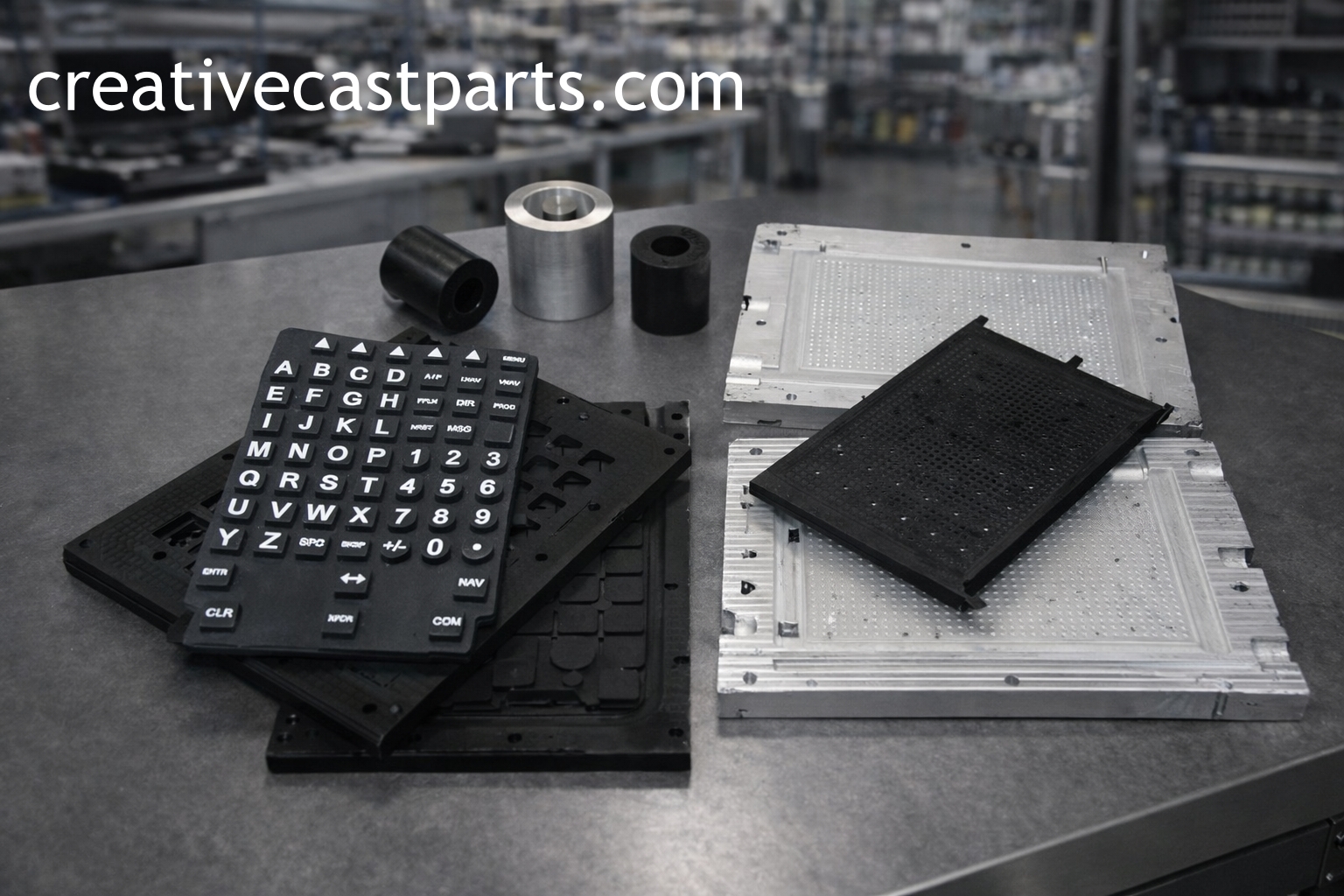
A Practical Guide Developed for Creative Cast Parts Clients
Overview – Design for Manufacturability DFM for Rotational & Urethane Casting
Design for Manufacturability (DFM) is the process of shaping a part so that it molds cleanly, finishes consistently, stays within tolerance, and performs as intended once it reaches its environment. For rotational (roto) casting and urethane casting, thoughtful DFM is what prevents warpage, sink, cracking, premature tool wear, extended finishing time, and field failures.
Creative Cast Parts has been refining these principles since 1996 across projects for exhibit houses, marketing agencies, product designers, manufacturing companies, injection molders, automotive teams, aerospace groups including NASA, and independent artists. The goal is always the same: produce cast components that look right, survive transit, and install fast on show floors.
This guide outlines the most important considerations when developing parts for rotational casting and urethane casting. It’s meant to help designers, engineers, and project managers avoid common issues and move from concept to production with fewer revisions, predictable lead times, and cleaner outcomes.
1. Geometry & Draft
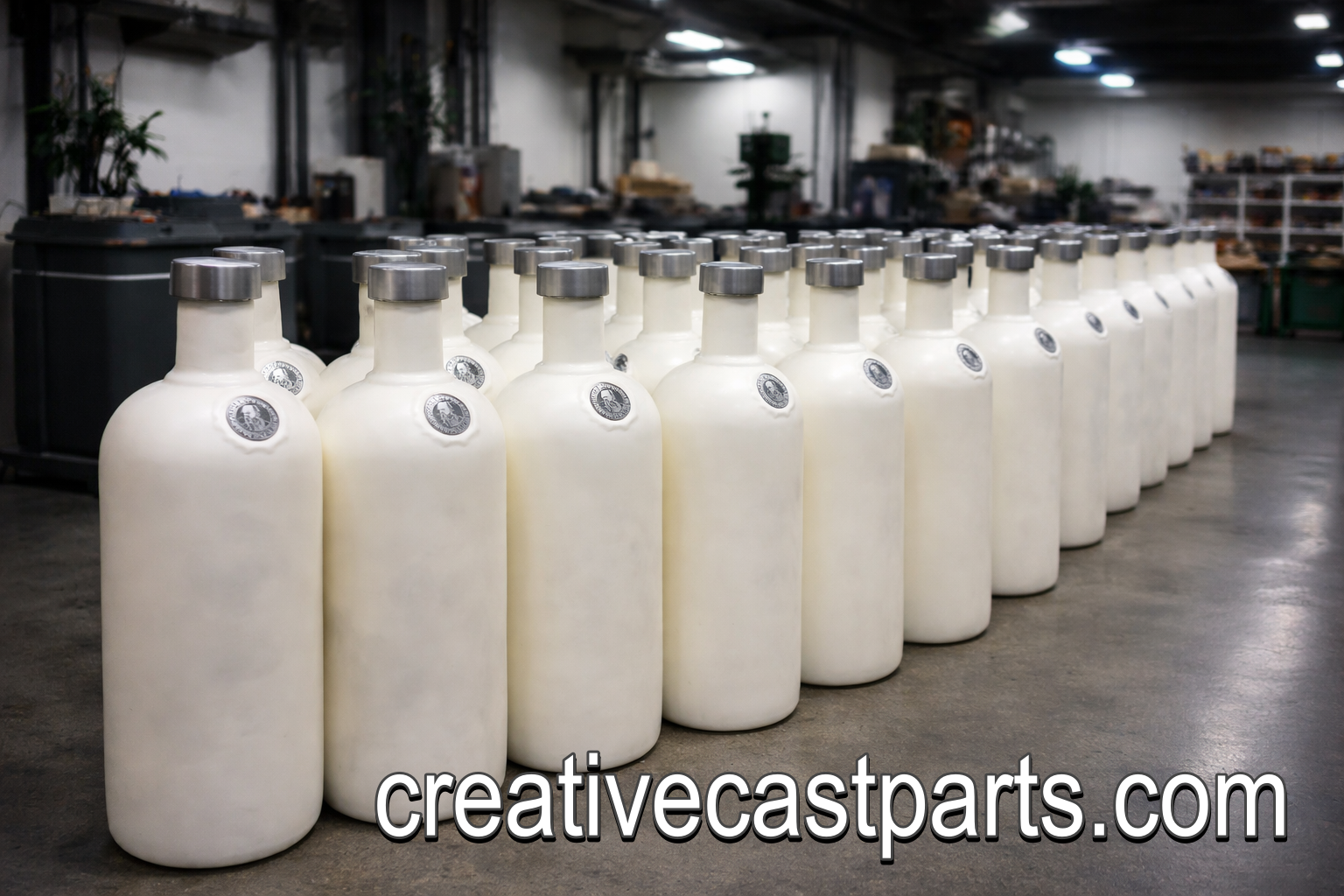
Roto-cast and urethane-cast parts need geometry that supports smooth release from the mold. Even small improvements to draft and radii help reduce tool complexity, finishing labor, and long-term costs.
Key Considerations
- Draft Angles
Add positive draft to all vertical surfaces. A minimum of 1–3° is typical, though deep cavities or textured surfaces may require more. - Rounded Corners vs. Sharp Corners
Radii reduce stress concentrations, improve flow, and eliminate thin-edge defects. - Avoiding Undercuts
Deep reverse features increase tool cost and make demolding dangerous or inconsistent. If undercuts are required for function, Creative Cast Parts can design collapsible or segmented mold features—but it should be planned early. - Large Flat Surfaces
Flat planes tend to warp during cooling. Introducing subtle features or structure prevents distortion.
Common Outcomes When Ignored
- Sticking during demold
- Tearing or surface damage
- Bowed or warped panels
- Increased mold complexity and cost
2. Wall Thickness Control
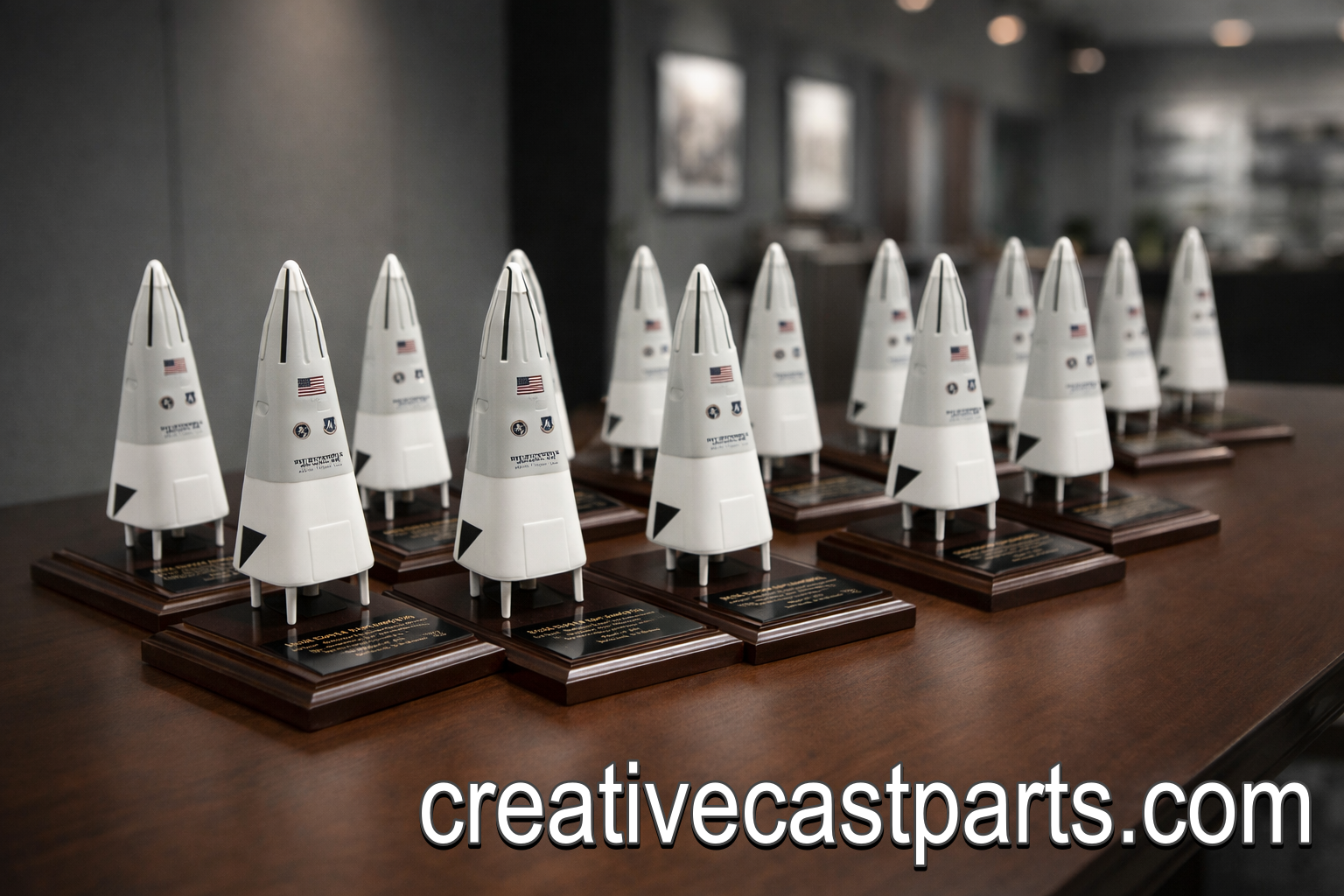
In molding, thickness is performance. Roto casting responds differently to thickness than urethane casting, so early decisions here affect everything downstream.
For Rotational Casting
- Target uniform wall thickness for consistent cooling and strength.
- Avoid “puddling zones” where resin accumulates and creates heavy, slumped areas.
- For large parts, Creative Cast Parts can guide ideal ranges based on resin type and geometry.
For Urethane Casting
- Maintain consistent thickness to prevent:
- Sink marks
- Internal stresses
- Voids
- Slower cure times
Bosses, Ribs & Reinforcements
These must be engineered into the part rather than thickened after the fact.
- Boss walls should match adjacent thicknesses.
- Ribs should be 40–60% of the wall thickness to avoid read-through.
- Heavy sections should be cored out when possible.
3. Parting Lines & Demold Strategy
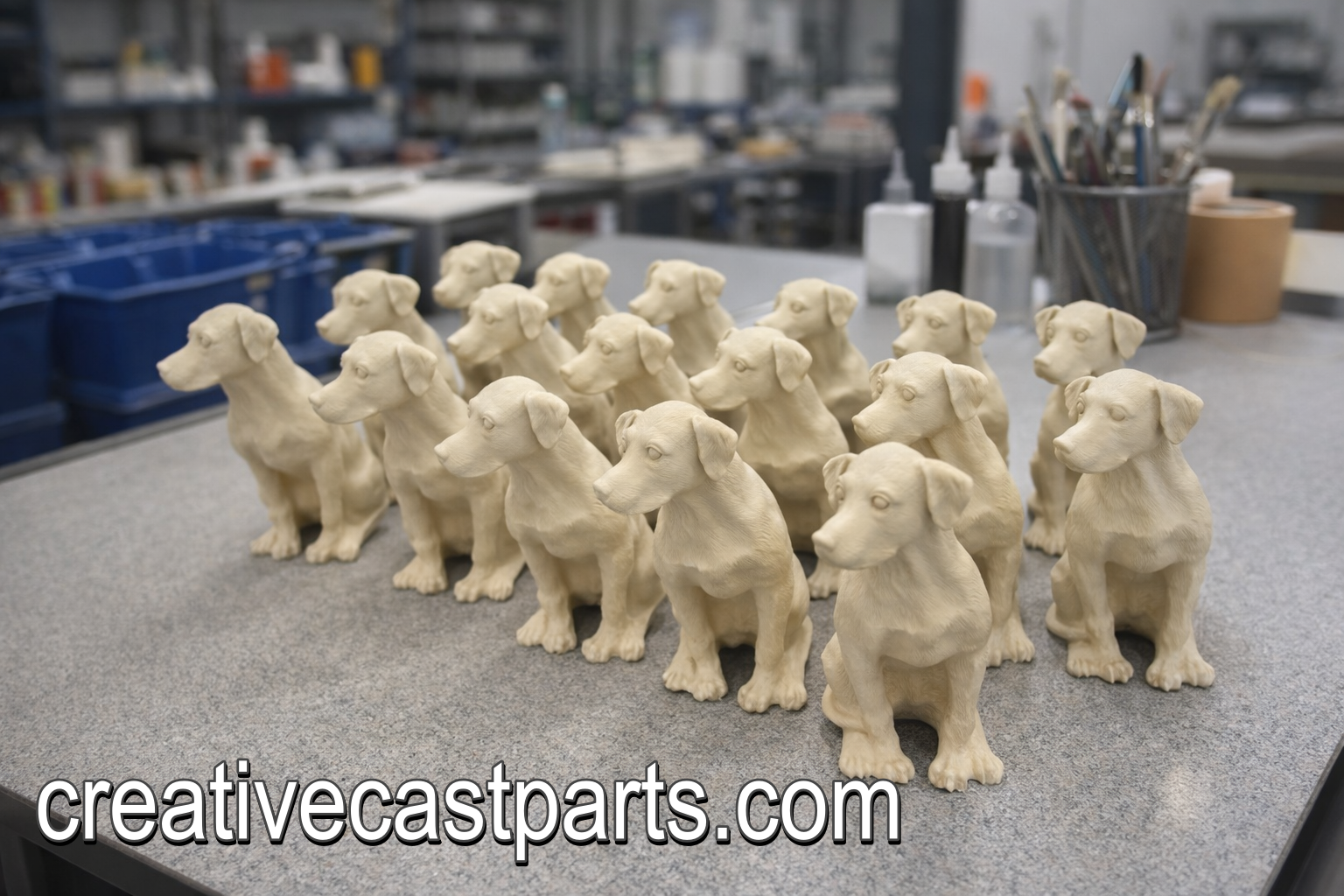
Where the mold splits—and how the part exits—determines how clean your finish will be.
Parting Lines
- Should follow natural shape transitions when possible.
- Avoid placing parting lines on A-surfaces when another location will work.
- Creative Carts Parts places parting lines to minimize sanding, filling, and post-processing.
Demold Strategy
- The part must release without damaging:
- Texture
- Edges
- Flanges
- Inserts
- Creative Cast Parts engineers draft, pull direction, and mold segmentation to balance cost and quality.
Why This Matters
Smart parting line planning can cut finishing hours by 30–50%, especially on high-visibility exhibit components.
4. Inserts, Hardware & Assembly Planning
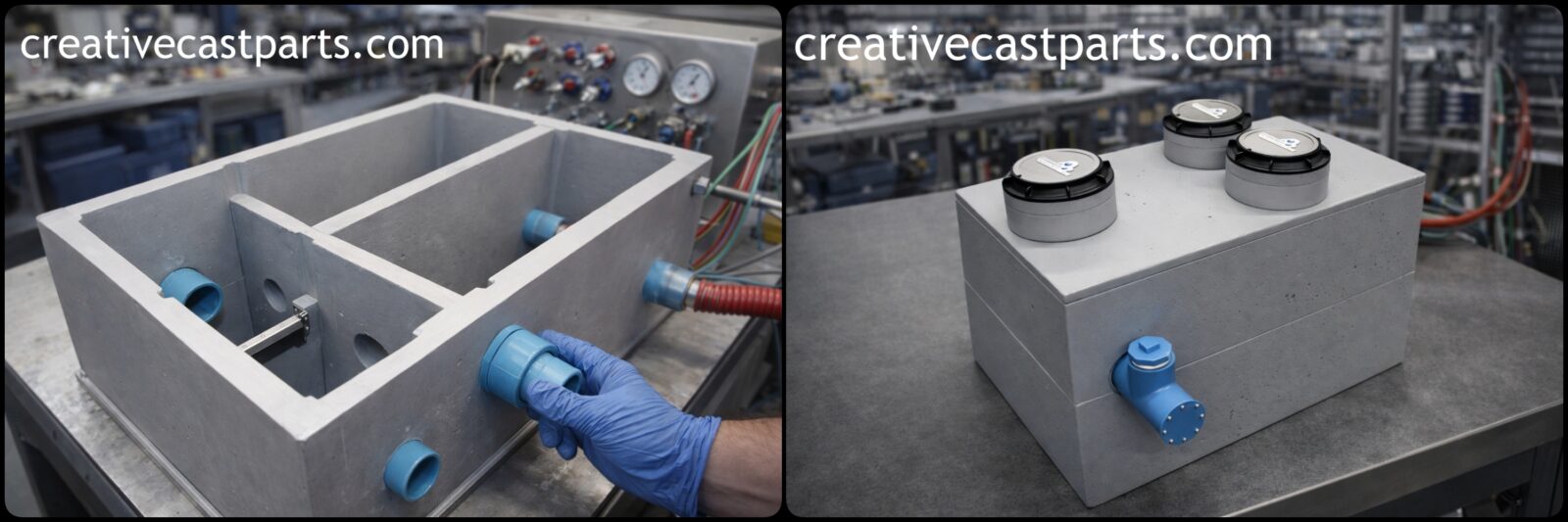
Many cast parts require:
- Threaded brass inserts
- Mechanical anchors
- Alignment dowels
- Hidden fastener points
- Bonded interfaces
- Internal reinforcement structures
When these features are introduced early in the design process:
- Tooling becomes simpler
- Inserts sit correctly and reliably
- Field assembly is faster
- The part performs better under stress
For clients with complex mechanical requirements, Creative Cast Parts can advise on anchor types, bond surfaces, and alignment strategies that work best with urethane or rotational plastics.
5. Material Selection
Material choice determines function, finish, and durability. Creative Cast Parts works with a range of urethanes and rotational plastics, each with different mechanical and cosmetic properties.

Key Parameters
- Durometer (hardness)
Determines flexibility, impact resistance, and feel. - UV Stability
Important for outdoor or high-exposure applications. - Impact / Drop Resistance
Critical for props, exhibits, and anything subject to handling. - Weight Targets
Roto casting is excellent for lightweight hollow parts; urethanes are ideal for solid or semi-solid components. - Finish Requirements
Different resins accept texture, paint, and coatings differently.
Examples
- Marketing props may need specific finishes capable of high-gloss automotive paint.
- Aerospace mockups require tight tolerances and dimensional stability.
- Exhibit components need predictable weight for rigging and mounting.
6. Finishing & Surface Requirements
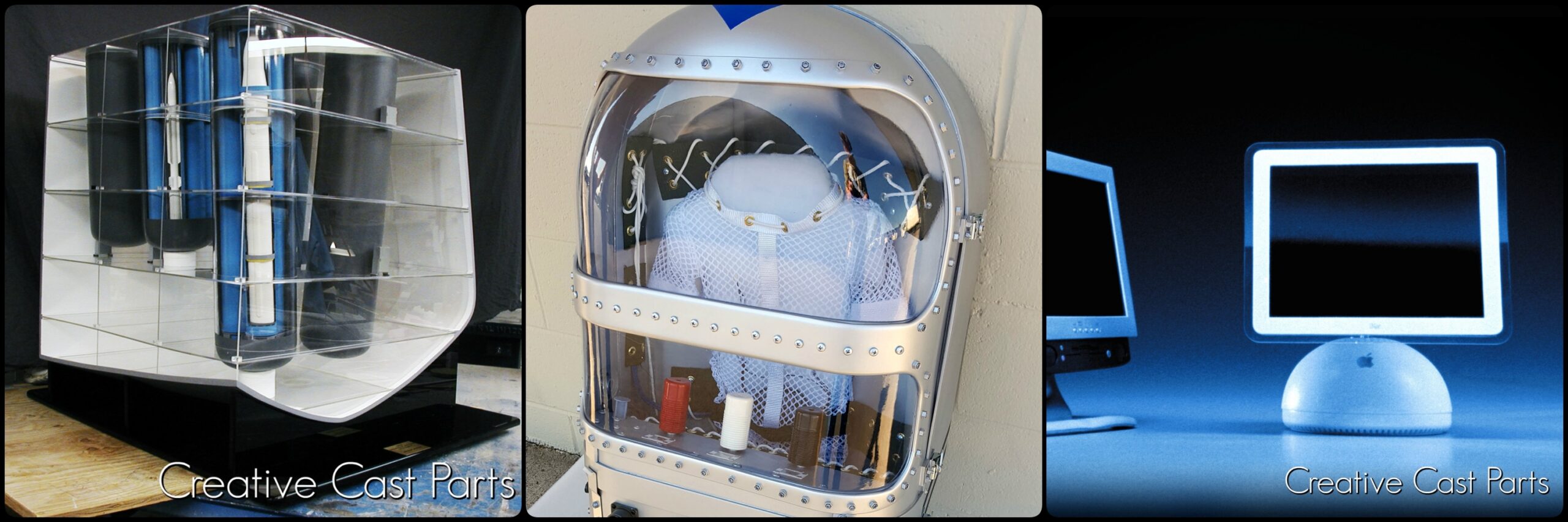
Finishing expectations should be defined early because they affect:
- Tooling decisions
- Surface prep
- QC criteria
- Production time
Texturing
- Textures can be molded in, applied post-mold, or both.
- Integrated textures reduce labor and ensure consistency.
Painting & Color Matching
- Automotive-grade paint systems require specific prep.
- Urethane parts may need sealers or adhesion promoters.
Consistency Across Runs
Creative Cast Parts’s finishing workflow is designed for repeatability so multi-part exhibits match from piece to piece.
7. Shipping, Crating & Installation
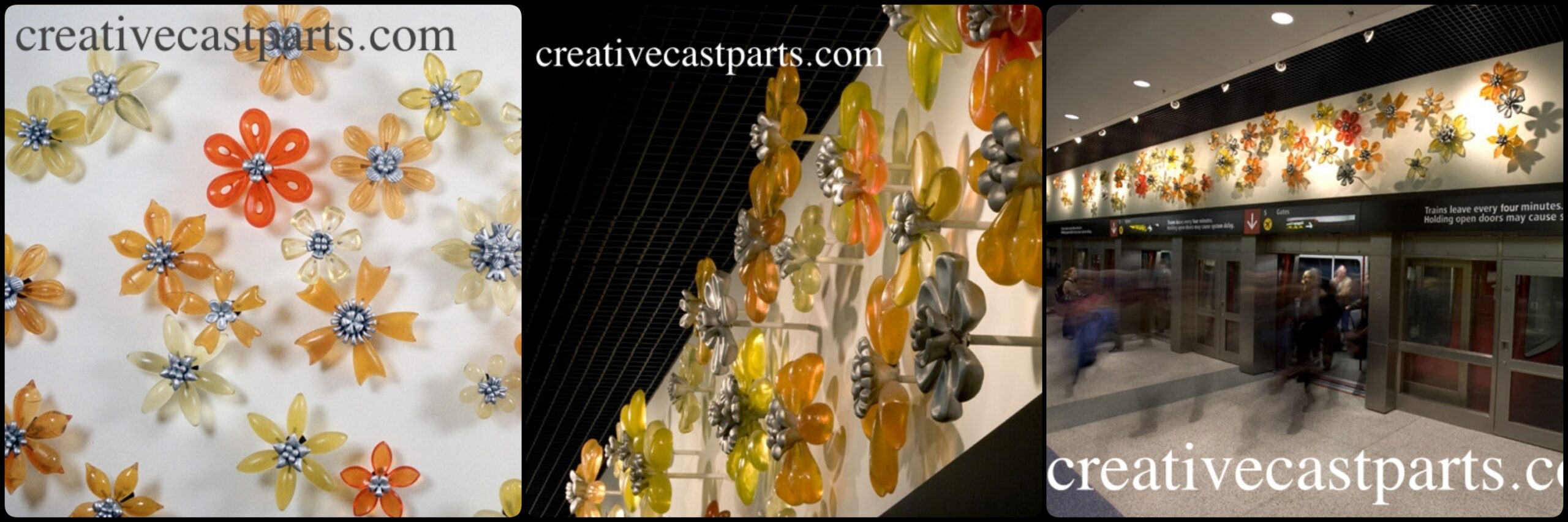
For many Creative Cast Parts clients, the job isn’t complete until the piece survives:
- Freight
- Handling
- Show floor installation
- Re-use across multiple events
Designing for Transit
- Reinforced sections prevent crush damage.
- Hand-holds and lift points reduce drop risk.
- Strategic weight reduction prevents stress cracks.
Designing for the Show Floor
- Fasteners that can be accessed quickly
- Clear alignment for multi-piece assemblies
- Interfaces that don’t require specialized tools
- Enough tolerance to allow quick fit—but not so loose that panels misalign
This is one of the most overlooked parts of DFM in exhibit work, and it dramatically affects real-world project outcomes.
8. How Creative Cast Parts Partners in the DFM Process
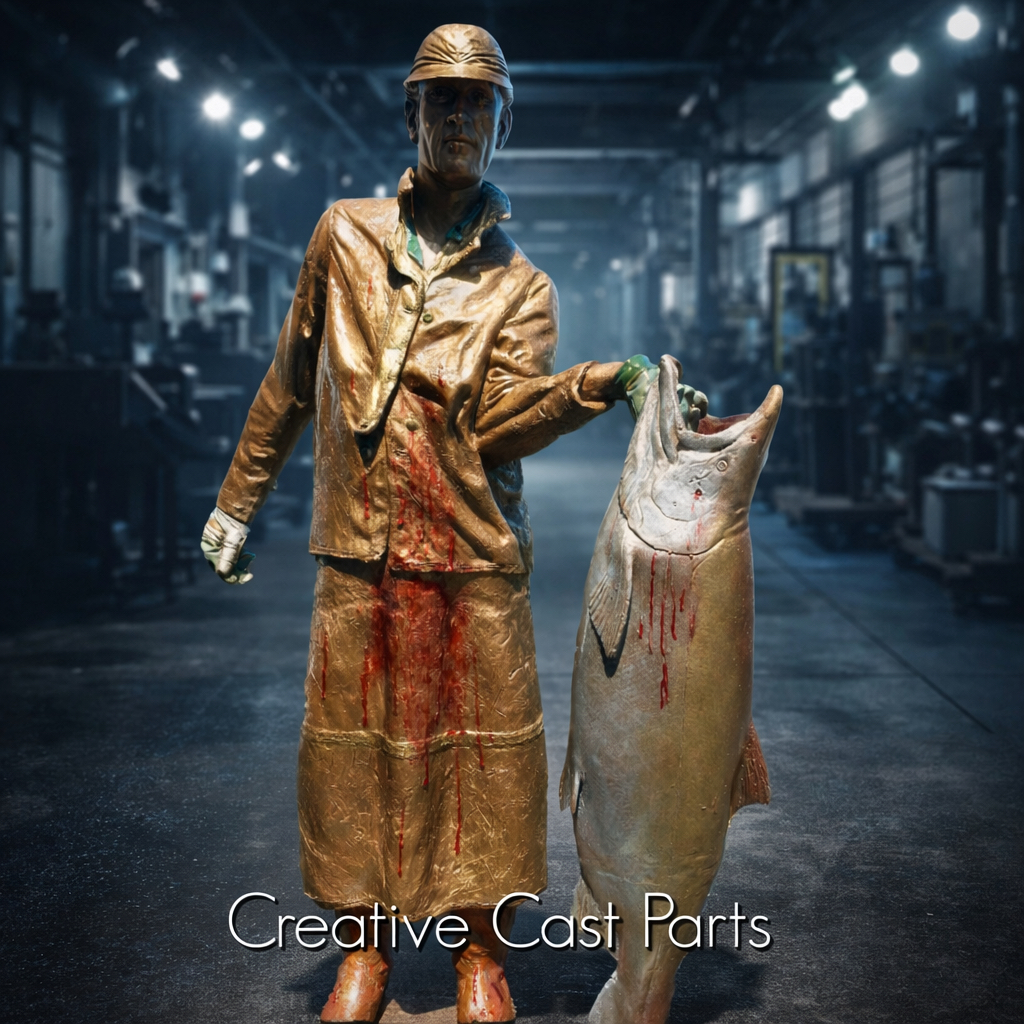
Creative Cast Parts doesn’t treat DFM as optional. It’s part of every project discussion, because good DFM:
- Reduces tool cost
- Speeds production
- Eliminates revisions
- Improves field performance
- Produces a cleaner finished part
With nearly 30 years of behind-the-scenes experience—including aerospace, automotive, NASA projects, exhibit production, and product prototyping—Creative Cast Parts has developed practical DFM insights that apply to both straightforward parts and highly complex geometries.
Clients are encouraged to involve Creative Cast Parts early in the design stage. That’s where the biggest gains in cost, timeline, and quality are found.